Zero Waste Kitchen City rethinks Vienna through circular design
In Vienna, designer Ivana Steiner has developed Zero Waste Kitchen City, a speculative research and urban design proposal that places the kitchen at the centre of a self-sustaining metropolitan system.
Expanding on her earlier Zero Waste Kitchen prototype, the project scales a single material-driven concept into a city-wide model grounded in circular design principles.
GALLERY
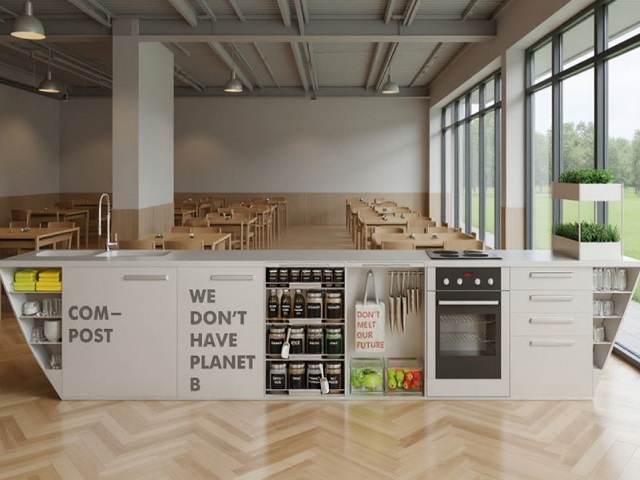
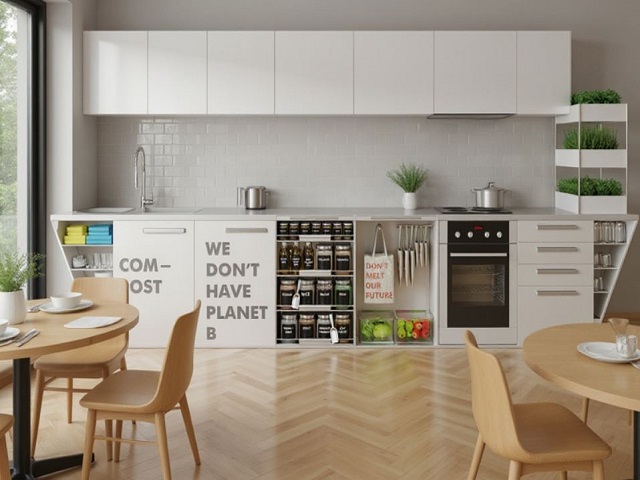
At the core of the proposal is the kitchen itself, conceived as both a physical space and an operational framework. The original prototype, constructed from recycled stainless steel and glass, establishes a clear material logic based on durability, transparency and full recyclability. In the urban iteration, these same principles extend outward, positioning the kitchen as a node within a broader network of food production, waste recovery and energy exchange.
Rather than isolating the kitchen within the home, Steiner embeds it into the fabric of the city. Shared kitchens are distributed across residential and institutional buildings, supporting communal cooking, education and localised food systems. These spaces are directly linked to rooftop gardens, neighbourhood markets and composting infrastructure, forming short, efficient supply chains that reduce transport and emissions while strengthening social connection.
Material strategy plays a critical role in reinforcing this loop. Recycled steel provides structural longevity and weather resistance, while timber introduces an organic counterpoint that reflects growth, decay and return to the soil. Together, these materials articulate a kitchen environment that is both robust and adaptable, capable of evolving alongside changing urban needs.
The proposal also repositions the kitchen within a productive landscape. Rooftops across the city are transformed into agricultural zones, supporting vegetables, orchards and small-scale grazing. These elevated systems integrate soil, water retention and composting, feeding directly into the kitchens below. In this model, waste is not discarded but cycled back into production, closing the loop between consumption and cultivation.
By linking kitchen design to infrastructure, ecology and public space, Zero Waste Kitchen City reframes the role of the kitchen beyond the domestic interior. It becomes an active participant in shaping urban life, demonstrating how architecture can support a regenerative and deeply interconnected future.
Images courtesy of Ivana Steiner via Designboom



Voltex’s ARIA outlets and switches range is now available nationwide, following its recognition in the Hardware and Building ...

We interviewed Palash Nandy, CEO Legrand Australia & New Zealand, at the Syd launch of it's INSPYRA® Collection. ...

There is not a 90-degree angle in sight at Skywalker Grill, the new restaurant and bar inside Los ...

A 1ha section of surface car parking at Salisbury Downs' Hollywood Plaza could make way for a new ...
The first building in a new city carries an unusual responsibility. It has to meet an immediate need ...