Reclaimed Timber Shapes Mountain Resort in China
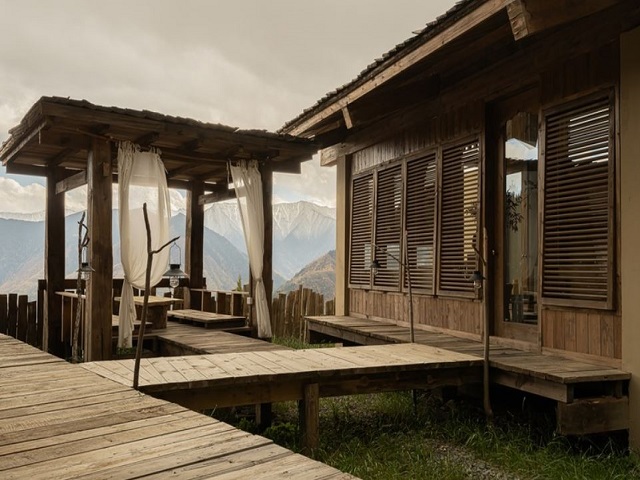
Perched on a ridge 3,000 metres above sea level in Jiuzhaigou, China, the Songtsam Travel Hotel Jiuzhai by Hangzhou Thinking Design Studio demonstrates how adaptive reuse and material conservation can create architecture that is deeply connected to its landscape.
GALLERY
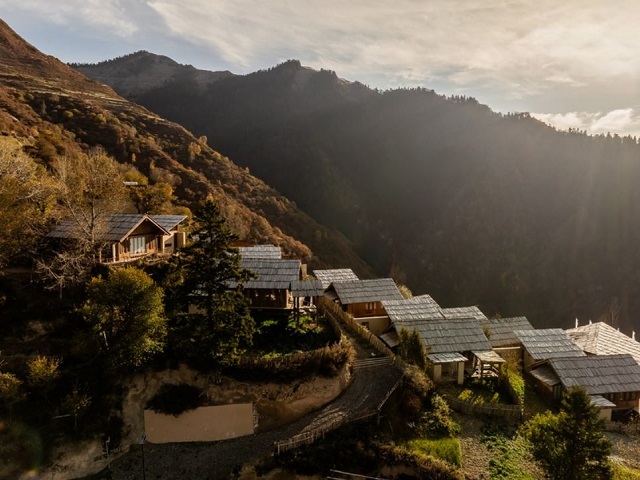
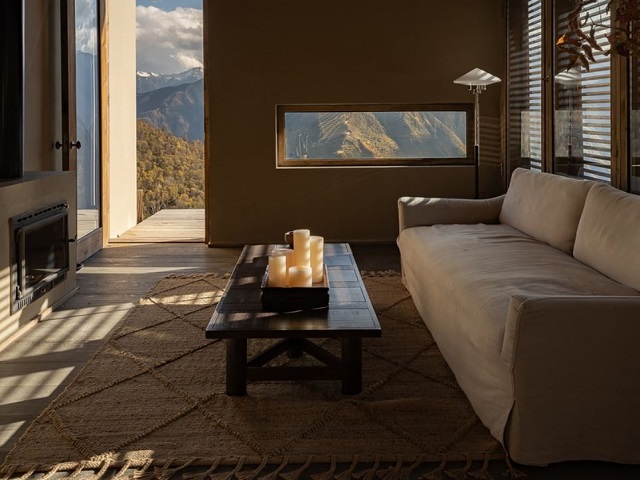
Rather than pursuing a conventional renovation, the project transforms a micro-village of eight existing timber cabins into a boutique mountain resort through a design approach centred on reuse, preservation and continuity.
Located among dense fir forests, rocky terrain and ever-shifting cloud formations, the development embraces the site’s natural character while minimising its environmental impact.
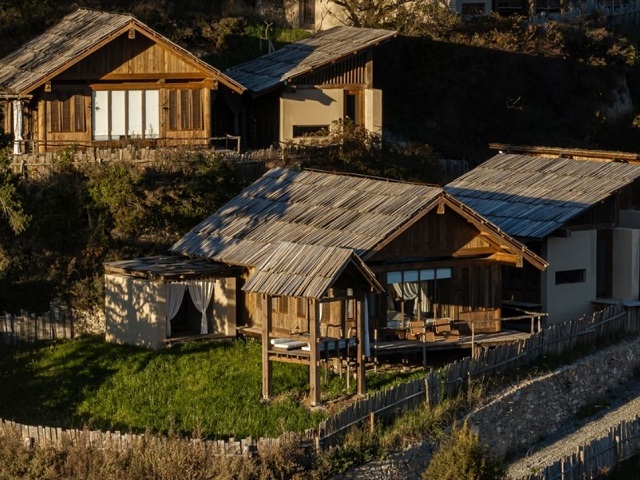
The resort comprises 12 detached guest units arranged across four clusters. Each unit occupies a plot of between 150 and 180 square metres and offers more than 80 square metres of built space. Instead of consolidating functions into a single structure, the design distributes living rooms, bedrooms, tea pavilions and soaking pools across separate volumes. This fragmented arrangement reduces the visual scale of the buildings and creates a dispersed architectural presence that sits comfortably within the mountain landscape.
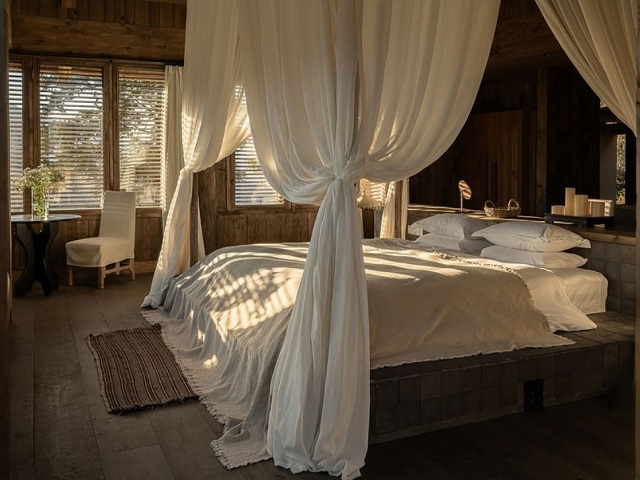
Timber forms the backbone of the project’s material strategy. Existing wood elements have been carefully retained and reintroduced throughout the development, while new structures follow the same construction principles. References to traditional Tibetan dwellings are evident in the use of timber shingles and tiled roofs, helping establish visual continuity with the surrounding region. Untreated and minimally processed materials have been deliberately selected to showcase natural textures, weathering and the passage of time.
Each guest suite has been conceived as a sequence of interconnected spaces rather than a single enclosed room. Transitional living areas act as thresholds between interior and exterior environments, encouraging a gradual movement from sheltered spaces to open landscape views. Large glazed openings maximise daylight while framing views of forests, mountains and shifting cloud cover, allowing guests to remain connected to the surrounding environment throughout the day and night.
At the heart of the resort, the central lobby continues the project’s commitment to material reuse. Reclaimed timber panels line the ceiling, while textured plaster walls and aged furnishings reinforce a restrained, tactile palette.
By retaining existing cabins, limiting ground disturbance and carefully integrating new structures into the topography, the Songtsam Travel Hotel Jiuzhai offers a thoughtful example of low-impact hospitality design that remains firmly embedded within its extraordinary alpine setting.
Images by You Pu via Designboom



Choosing between hydronic vs electric underfloor heating is one of the biggest decisions in any renovation or new ...
Building in the Galápagos Islands means working within one of the world’s most environmentally sensitive landscapes. For architect ...
A new town centre and a land-lease village of up to 364 homes are proposed for Yalyalup, as ...