Pistachio green kitchen breathes new life into Melbourne apartment
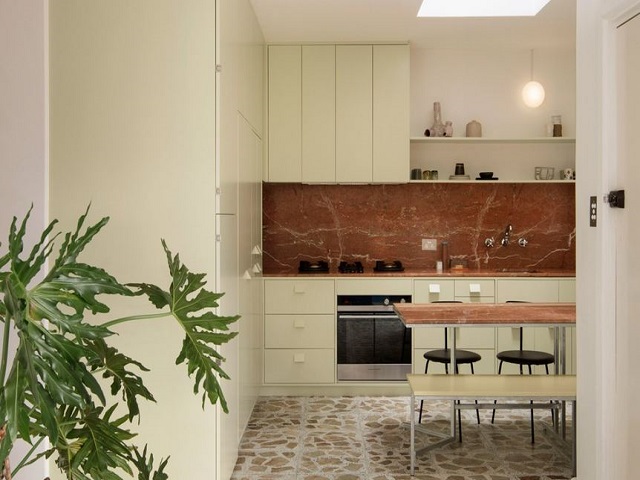
A carefully considered renovation has transformed a neglected 1960s apartment in Melbourne’s Brunswick into a light-filled home where a pistachio green kitchen celebrates the building’s mid-century origins while embracing contemporary living.
Architect Murray Barker and artist Esther Stewart led the redesign of the two-bedroom apartment, which had sat vacant for two decades before its new owners embarked on the renovation.
GALLERY
Despite years of neglect, the residence retained many of its original features, including linoleum flooring, carpets and salmon-pink walls. Rather than erase this history, the design team looked to preserve its character through a palette and material selection that pays homage to the apartment’s original interior.
The kitchen became the focal point of the transformation. Although the apartment’s generous windows delivered abundant natural light and cross ventilation, the original kitchen was enclosed, disconnected from the living room and too compact to accommodate everyday dining. Barker and Stewart reconfigured the floor plan to establish a stronger relationship between the kitchen and adjoining living spaces, creating a more open and functional layout.
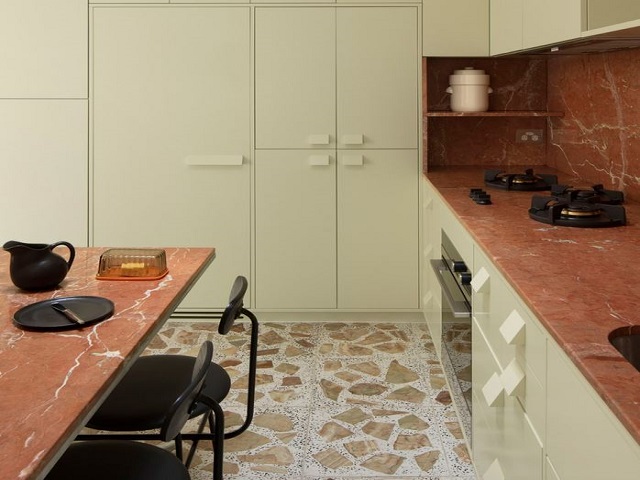
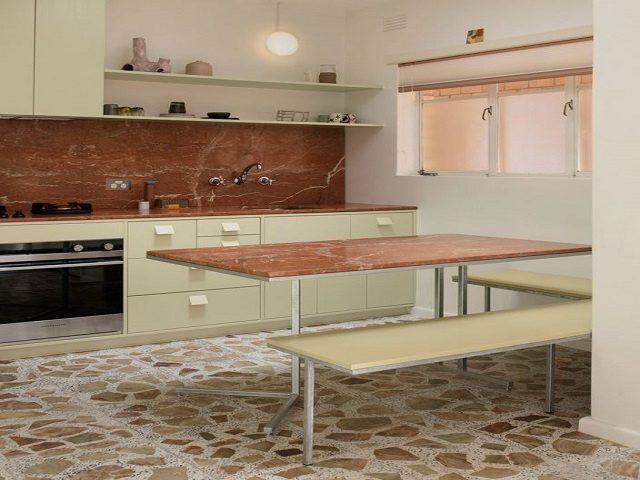
Partial demolition of the dividing walls allowed integrated joinery to define circulation while maintaining a sense of openness. The resulting L-shaped kitchen is anchored by a custom steel-framed dining table topped with Rosa Alicante marble, paired with fixed banquette seating that encourages gathering and conversation.
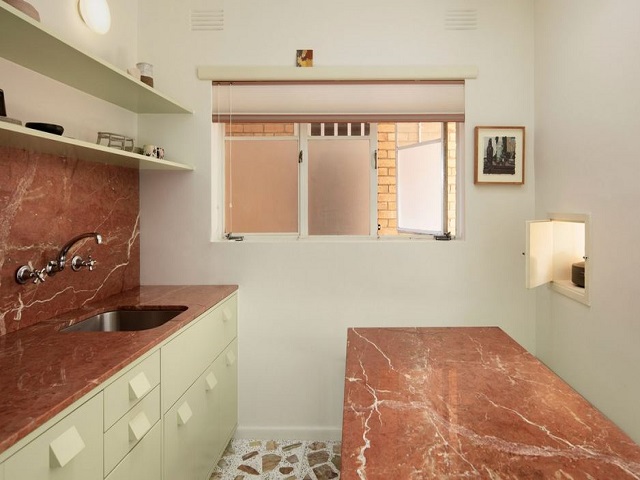
A matching Rosa Alicante marble benchtop extends through the kitchen, housing the stove, oven and sink within a streamlined composition that is visible from the living area. This continuity of material strengthens the visual connection between the two spaces while introducing a rich warmth that complements the apartment’s mid-century influences.
The standout feature is undoubtedly the pistachio green joinery, selected as a contemporary interpretation of the original 1960s kitchen. Detailed with visible framing, custom finger pulls and finely crafted cabinetry, the joinery introduces colour without overwhelming the restrained interior. Sliding pocket doors conceal a dedicated appliance station, allowing the toaster, kettle and coffee machine to remain hidden when not in use for a cleaner, more considered aesthetic.
Above the dining area, a skylight fitted with thick glass roof tiles draws natural light deep into the kitchen. Combined with an insulated ceiling and double-glazed roof window, the intervention improves year-round comfort while enhancing the atmosphere of the home’s revitalised social heart. The result is a kitchen that honours the apartment’s heritage while delivering the flexibility and functionality expected of modern living.
Images by Benjamin Hosking via Dezeen


In a 1920s waterfront home in Sydney's Vaucluse, Blue Tea has repositioned the kitchen to change not only ...
A considered mix of handmade surfaces, aged metals and natural stone gives a Cremorne Point ensuite a sense ...
The kitchen benchtop is increasingly being treated as an architectural surface rather than simply a worktop, with designers ...