Power without the visual interruption!
Concealed power offers designers another way to balance everyday convenience with carefully considered surfaces. A stone splashback is often chosen for its distinctive veining. A kitchen island might be designed around a sculptural form or the warmth of timber.
GALLERY

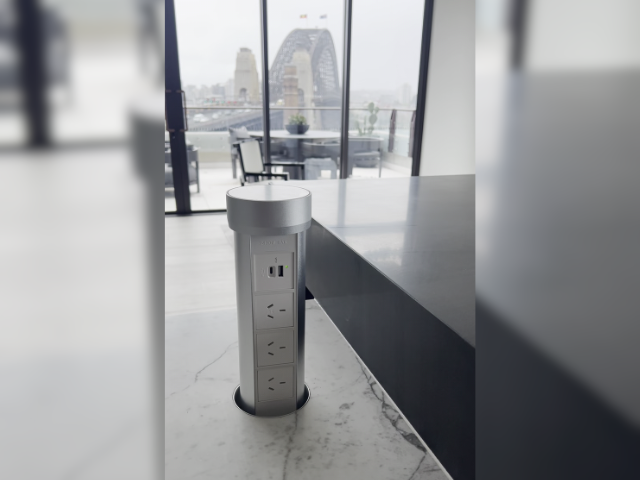
Yet the placement of power points can interrupt these features, introducing a functional detail into an otherwise carefully composed space. Electrical access deserves the same consideration as lighting, storage and material selection. Where it sits influences how a room works, while its visibility can affect the overall design. For architects, interior designers and homeowners, that raises a useful question: does every power point need to remain on show?
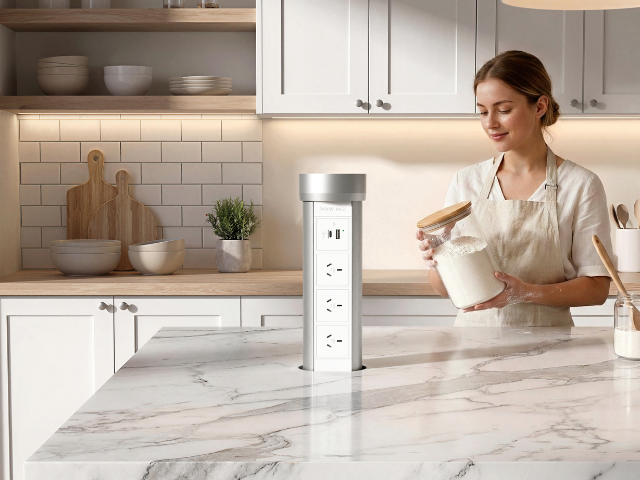
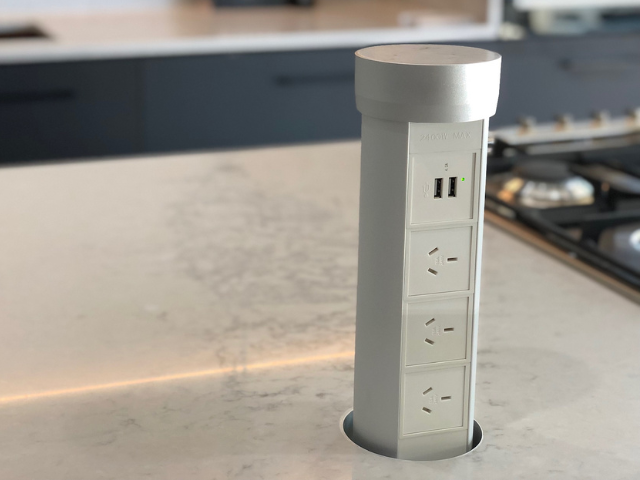
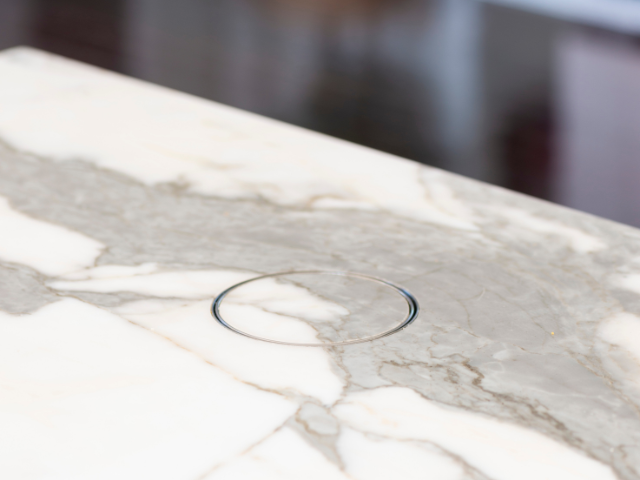
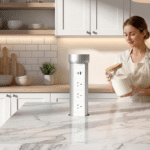
Point Pod offers a way to make power available when needed and conceal it between uses. Installed beneath a stone or timber benchtop, the electrically operated unit rises above the surface when its top is pressed, bringing the outlets within reach. A matching benchtop insert forms the visible top, helping the retracted unit blend with the surrounding material.
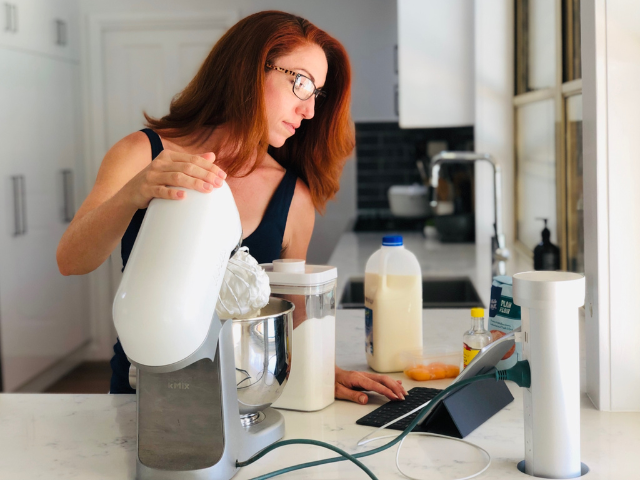
In a kitchen, this approach can be particularly useful where conventional outlet placement competes with a key design feature. Access through the benchtop can reduce the need for power points across a feature splash back or on an exposed island face, allowing those surfaces to play a more uninterrupted role in the room. The benefit is just as relevant – kitchen islands accommodate food preparation, homework, device charging and working from home, sometimes within the same afternoon. Considering where these activities happen helps designers position power where it will be useful, including away from a wall.
The same thinking extends to a study nook or bespoke workspace, where convenient electrical access needs to sit comfortably alongside carefully detailed joinery.
Achieving that balance starts during planning. Outlet placement should reflect the appliances and devices people expect to use, how often they need them and the work surface available. A concealed unit also needs space beneath the benchtop, making early coordination with cabinetry and surface fabrication an important part of the design process.
For appliances that remain plugged in, a dedicated outlet may still be the most practical choice. Concealed power is especially relevant where access is occasional and the appearance of the surface matters between uses. Point Pod opens up another option to that conversation. By considering power alongside the joinery and materials from the outset, designers can create interiors that support everyday activity while preserving the details that make a space distinctive.
Power remains essential. Its visibility can be a design choice.
Discover more about the fully-integrated power socket system with Point Pod


Following the momentum of EuroCucina 2026, Unox Casa continues its journey to bring professional cooking technology into the ...
Zuid Penthouse is a majestic and refined penthouse in Scheveningen, overlooking the sea of The Hague. In here, ...
Nestled within the Australian landscape, Eucalyptus Home embodies a contemporary vision of family living, where warm natural materials, ...
Nestled in the hills overlooking the crystalline coastline of Santa Margherita Ligure, this summer retreat embodies the essence ...
Concealed power offers designers another way to balance everyday convenience with carefully considered surfaces. A stone splashback is ...