Hermit Resort Draws Inspiration from Ancient Xing Kiln Ruins
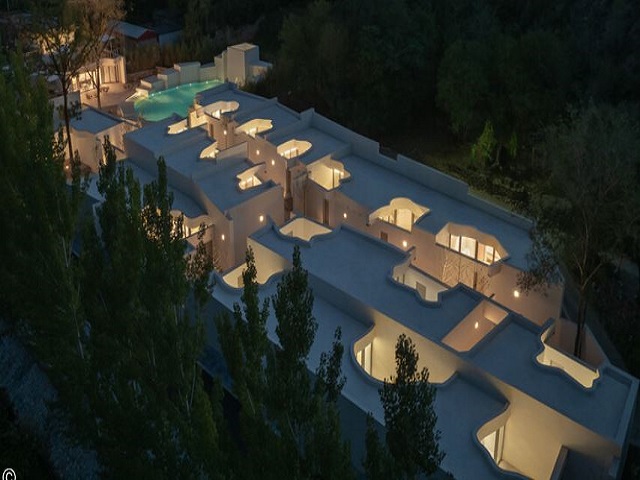
A new hospitality project known as the Hermit Resort has taken shape beside one of China’s significant archaeological sites, the Xing Kiln Ruins.
These remnants, which date back more than 1,500 years, have lost much of their built form to time but still retain the distinctive kiln layout that once defined the region’s renowned ceramics industry. The most recognisable arrangement is a series of chambers set in a horseshoe around a small courtyard.

GALLERY
This allowed a single craftsperson to monitor multiple kilns at once, and the logic of this configuration underpins the resort’s design approach.
The site for the resort carries its own history. It sits on the remains of a former village that was relocated, leaving behind fractured masonry and partial walls scattered along a gentle slope beside a stream. Rather than remove or erase these traces, the design team chose to build a new layer atop the old and intentionally create a contemporary interpretation of a relic. The project challenges expectations of new architecture by drawing on the emotional impact of weathered sites rather than prioritising precision or formal clarity.
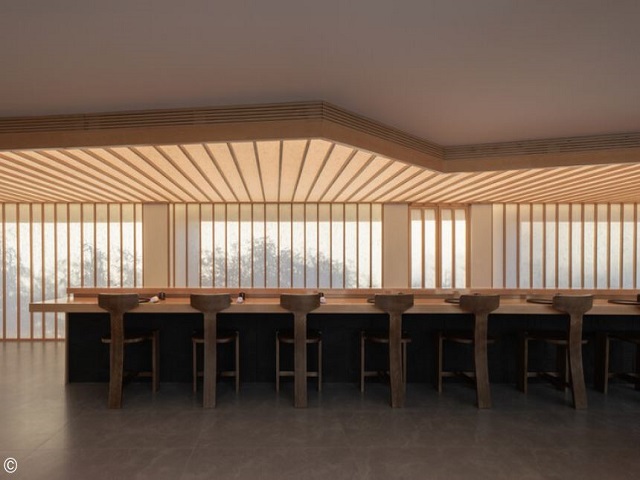
Across the settlement, the plan reflects the dual qualities seen in ancient ruins. Over centuries, structured spaces degrade in ways that appear random, though their underlying order often remains unmistakable. This balance of clarity and fragmentation has been carried into the resort. A series of small single storey buildings forms a village like cluster, loosely emulating the character of mountain settlements. Boundaries between walls, courtyards, alleys and rooms merge and overlap. Elements weave into one another, creating unexpected transitions and a sense of quiet discovery throughout the day.
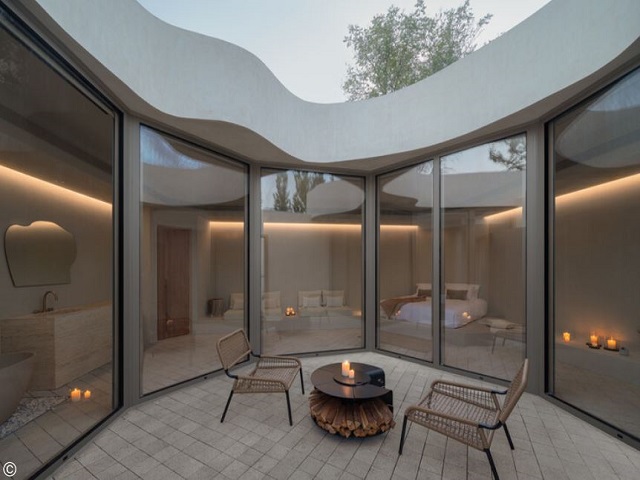
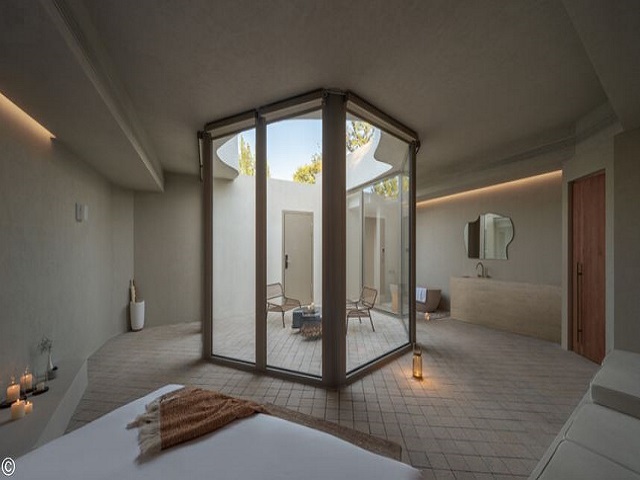
The resort contains 50 guest rooms, each with its own private courtyard. These courtyards are not simply placed beside internal rooms. Instead, the rooms partially wrap around the outdoor space in a horseshoe form that mirrors the Xing Kiln pattern. The result softens the separation between indoor and outdoor areas and evokes the feeling of being within a kiln chamber. This spatial inversion is central to the guest experience and reinforces the project’s ambition to blend the qualities of an archaeological site with contemporary hospitality.
Images by Chao Zang via ArchDaily


Wall Rapture joins the Austaron Surfaces collection, bringing authentic mineral character, craftsmanship and design flexibility to contemporary interiors. Known ...
Building in the Galápagos Islands means working within one of the world’s most environmentally sensitive landscapes. For architect ...