Kyoto Machiya Reborn as Boutique Stay
Japanese design firm Studio Aluc has transformed a century-old machiya townhouse into a refined short-stay hotel in central Kyoto, carefully retaining traces of its past craftsmanship.
Named Nazuna Kyoto Higashihonganji, the 600 square metre property sits directly opposite the Higashi Honganji Temple and offers seven guest rooms alongside shared dining and lounge spaces.
GALLERY
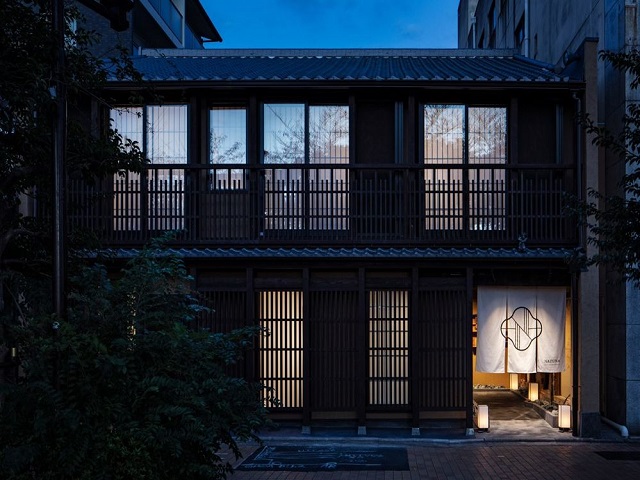
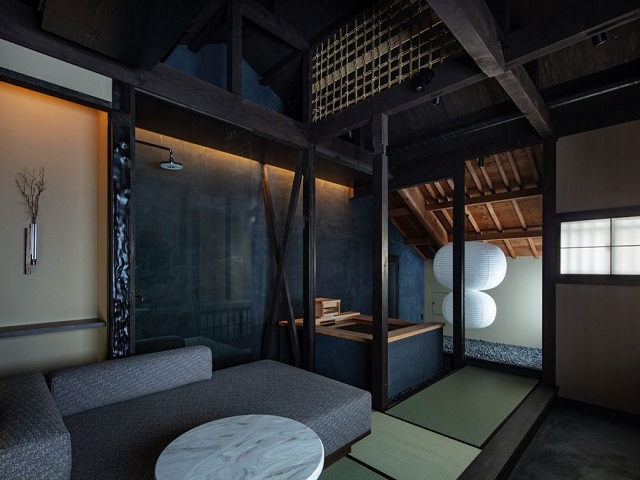
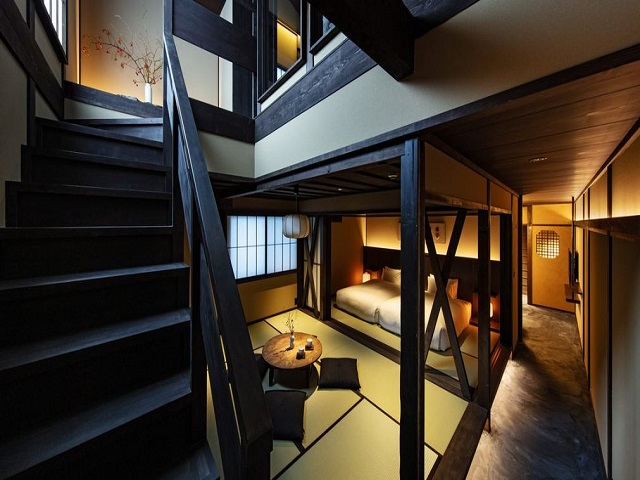
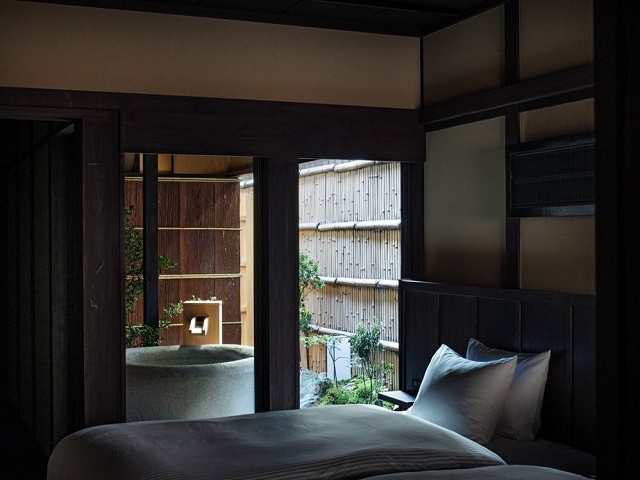
The project centres on a regenerative design approach, with Studio Aluc preserving key elements of the original structure. Exposed timber framing, earthen walls and roofboards remain visible throughout, grounding the renovation in the material history of the building. Rather than overwrite the existing architecture, the intervention draws attention to its age and texture, allowing the patina of time to inform the spatial experience.
Drawing on the traditions of a ryokan, the design introduces sliding washi paper screens, tatami flooring and futon furnishings. These are paired with natural materials such as timber, clay and handcrafted paper lighting to establish a restrained palette of earthy tones. The result is an interior that feels both contemporary and deeply rooted in place.
Central to the design is an exploration of shadow as a spatial device. Shoji screens, timber lattices and textured wall surfaces filter natural light, creating layered patterns that shift throughout the day. This approach reflects a long-standing Japanese aesthetic that values subtlety and atmosphere over visual excess.
Each guest room is anchored by a bathing area that merges with the living space. On the ground floor, stone-pressed open-air bathtubs connect guests to the outdoors, while upper-level rooms feature hinoki cypress baths with a spa-like quality. By integrating bathing and sleeping zones, the studio challenges conventional layouts and introduces a sense of openness that feels removed from daily routines.
Communal areas have been reconfigured to enhance light and spatial flow. Walls were removed to create a more generous dining and lounge setting, punctuated by small tsuboniwa courtyard gardens. Framed by large glass panels, these gardens bring natural light deep into the plan while reinforcing a connection to nature.
Through careful preservation and precise intervention, Studio Aluc delivers a project that balances heritage with contemporary hospitality, offering a considered reinterpretation of the traditional machiya.
Images by Kenta Hasegawa via Dezeen



We interviewed Palash Nandy, CEO Legrand Australia & New Zealand, at the Syd launch of it's INSPYRA® Collection. ...

As part of Melbourne Design Week, Riva Ceramica collaborated with West End Art Space to transform its Brighton showroom ...

During the 2026 NGV Design Week, Riva Ceramica hosted Protecting Design Integrity in a Compromised World — a ...

As part of NGV Design Week, Riva Ceramica hosted Design Voices: Where Object Meets Space — a sell-out evening ...

There is not a 90-degree angle in sight at Skywalker Grill, the new restaurant and bar inside Los ...