Tuscan Farmhouse Reimagined with Metallic Details
Crosby Studios has completed the restoration of a 17th-century farmhouse in Roccalbegna, Tuscany, transforming a once-neglected rural structure into a family retreat and the operational centre of La Terra di Neena, an emerging olive oil and homewares brand.
What began as a personal search for heritage has evolved into a layered project spanning architecture, landscape rehabilitation and brand identity.
GALLERY
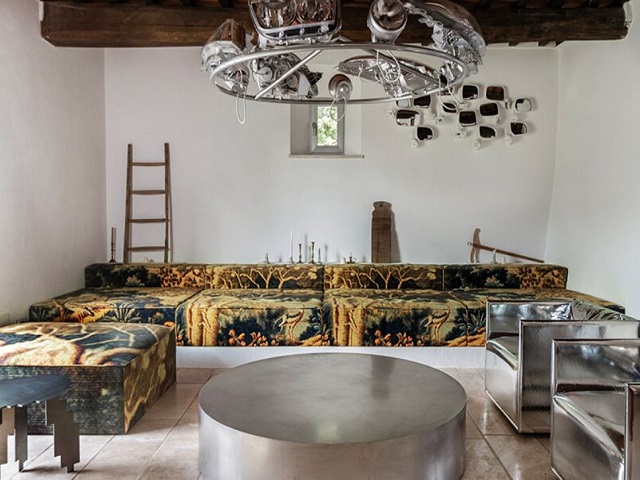
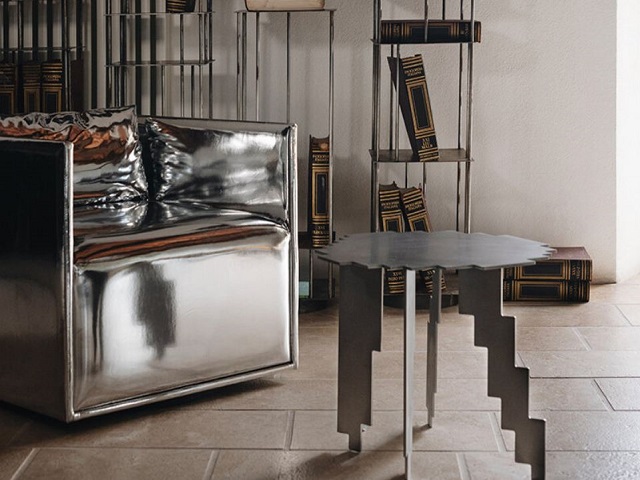
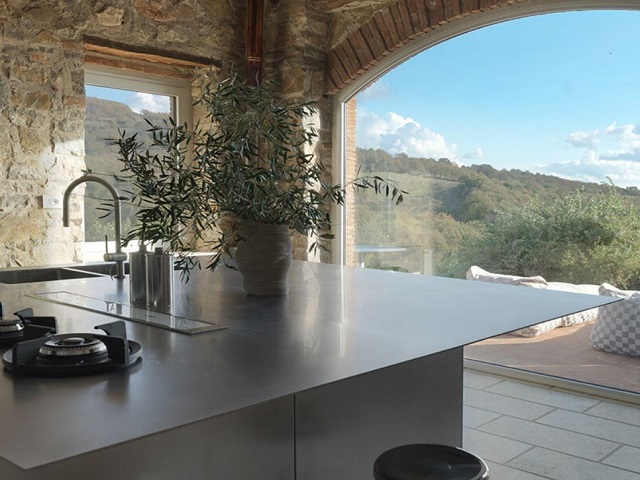
Set within a wild olive grove across a 52-hectare site, the farmhouse retained much of its original character, from exposed timber beams to thick masonry walls and traces of its agricultural past. Crosby Studios approached the renovation with a light but deliberate hand, preserving these elements while introducing its distinct material language. Metallic finishes, graphic forms and sculptural insertions punctuate the interiors. Traditional timber flooring on the upper level has been replaced with hand-laid river stones, creating a tactile, irregular surface. Elsewhere, salvaged headlights are reassembled into chandelier-like fixtures, while clusters of rear-view mirrors line the walls, referencing historic craft traditions.
The studio also repositions utilitarian materials within a domestic setting. Stainless steel defines communal spaces, spanning a four-metre dining table, benches and a custom kitchen island. In the primary bedroom, a canopy bed constructed from 120 repurposed red T-shirts introduces a conceptual layer tied to memory and anonymity. Textiles continue this exploration, with AI-assisted velvet patterns reinterpreting tapestry motifs and industrial finishes translated into soft, Mylar-like fabrics.
Beyond the building, the project extends into a comprehensive ecological restoration. In collaboration with landscape architect Anna Andreyeva of Planting Strategies, the team undertook a multi-year effort to clear overgrowth, rehabilitate ancient olive trees, stabilise soil conditions and reintroduce supportive planting. The result is a revived agricultural landscape that now underpins the La Terra di Neena initiative.
For Crosby Studios founder Harry Nuriev, the project reflects his ongoing manifesto of Transformism, centred on revealing new potential within existing materials and contexts. This philosophy carries through to the brand, which draws directly from the estate. Its collection includes olive oil, homewares and collectible furniture, from dented tins reimagined as vessels to mirrored tableware and seating formed from unused oil cans.
Presented during Milan Design Week 2025 and later in New York, La Terra di Neena positions the restored farmhouse not only as a place of living, but as a generator of design, production and cultural continuity.
Images by Matteo Capirola via Designboom



Voltex’s ARIA outlets and switches range is now available nationwide, following its recognition in the Hardware and Building ...

We interviewed Palash Nandy, CEO Legrand Australia & New Zealand, at the Syd launch of it's INSPYRA® Collection. ...
As part of Melbourne Design Week, Riva Ceramica collaborated with West End Art Space to transform its Brighton showroom ...
During the 2026 NGV Design Week, Riva Ceramica hosted Protecting Design Integrity in a Compromised World — a ...
As part of NGV Design Week, Riva Ceramica hosted Design Voices: Where Object Meets Space — a sell-out evening ...