Regenerative Futures Studio sets benchmark for carbon-positive learning
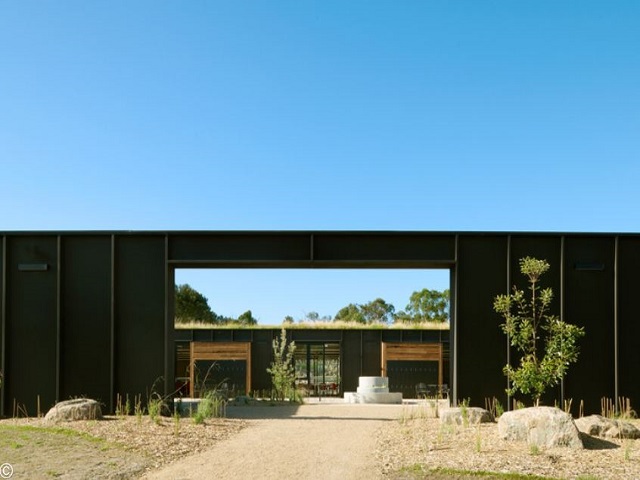
The Regenerative Futures Studio has been conceived as a carbon sequestering, solar powered living ecosystem that reframes how educational buildings can support both learning and environmental repair.
Designed as a hands on, project based environment, the facility enables students and staff to engage directly with real world challenges through a regenerative lens, while operating with almost zero waste.
GALLERY
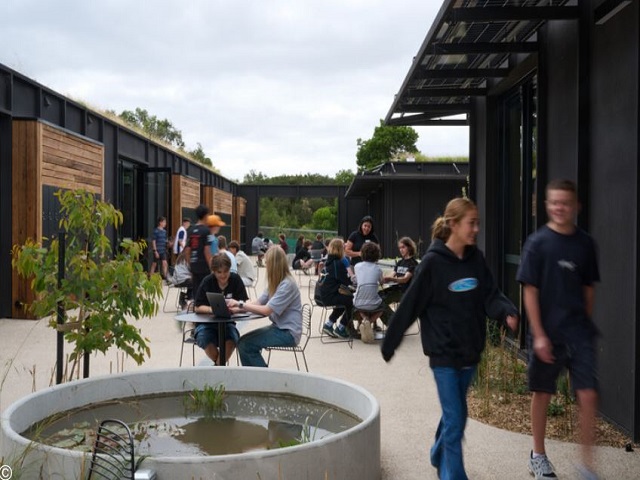
Set on a sloping site on the outskirts of a senior campus, the studio is arranged as three pavilions connected by courtyards and sheltered outdoor learning areas. This configuration frames views towards the surrounding farm, adjacent nature reserve and the main school campus, embedding learning within its broader landscape context.
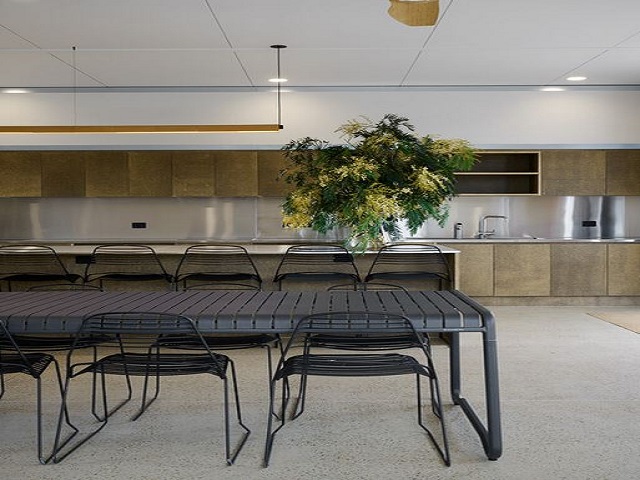
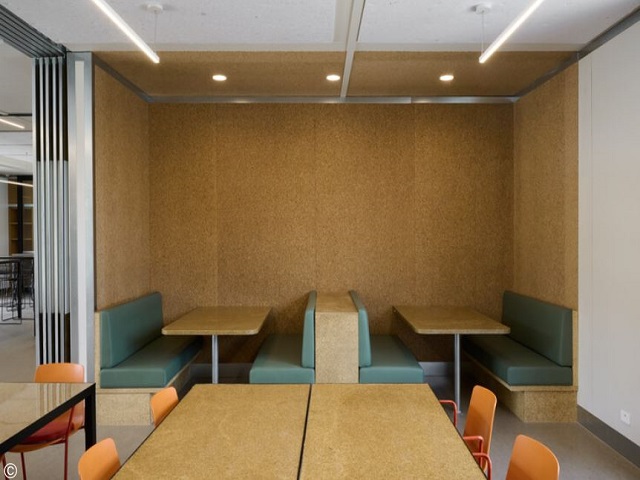
The largest pavilion contains five flexible learning spaces alongside two quiet learning pods, offering varied settings that support student agency and personalisation. Acoustic ceiling panels made from reclaimed fabric improve comfort, while large sliding doors allow collaborative project work to occur alongside more traditional subject based learning. Sliding hemp whiteboards extend learning and display opportunities, transforming the interiors into a linear gallery for exhibiting student work. A second pavilion accommodates staff areas and amenities, while the third acts as a homestead, providing a shared kitchen and social space that encourages connection and community.
Construction of the studio combines a prefabricated steel truss post and beam frame with straw wall and ceiling panels, a recycled cork façade spray and a living green roof. The unitised system relies on prefabricated components and local procurement, resulting in a near zero waste construction process. Durrapanel straw panels embedded with biochar actively filter pollutants from the air, contributing to improved indoor environmental quality.
The green roof incorporates a drought resilient wicking bed that supports native butterflies, birds and bees, creating a protected habitat while adding thermal mass. Its soil weight reduces the need for mass concrete footings, lowering embodied carbon. Operationally, the building runs entirely on solar power supported by an Australian made battery storage system that is fully recyclable. All materials used across the project are recyclable, with VOC free, low embodied carbon and carbon sequestering products prioritised throughout.
In a move to extend its impact beyond the campus, the project team has open sourced the studio’s designs under a Creative Commons licence. This approach allows other schools to adopt the technologies and strategies, providing public benefit from a private project and offering a tangible example of what a regenerative future for education could look like.
Images by Earl Carter via ArchDaily


Australia’s new home market is showing signs of a sharper slowdown, with sales falling for a fourth consecutive ...
When Modum Atelier outgrew its office at Shanghai’s Guochuang Park, the architecture practice chose not to start again. ...
Stockland has secured approval for a 478-home apartment development on the former Jetstar headquarters in Melbourne’s Collingwood, marking ...