Palace Coffee Activates Melbourne Laneway with Sculptural Espresso Bar
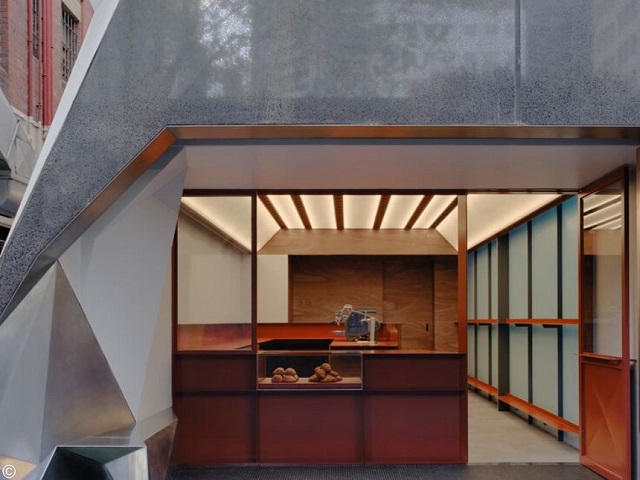
Tucked into a Melbourne laneway at the base of Monaco House, Palace Coffee demonstrates how thoughtful architectural intervention can transform even the smallest hospitality venue into an active piece of the public realm.
Facing the imposing brick wall of the Melbourne Club, the espresso bar embraces its constrained footprint, creating a standing-room-only destination that prioritises interaction, movement and visibility.
GALLERY
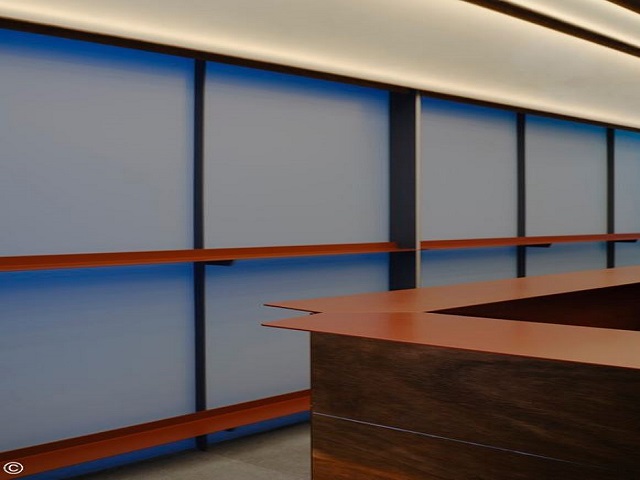
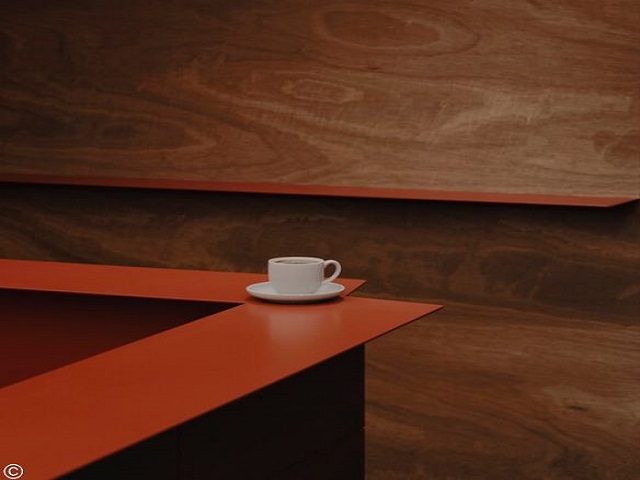
Rather than meeting the street directly, the architecture is recessed from the laneway to create a transitional zone where patrons can pause, queue and converse. This intentionally designed threshold blurs the boundary between the urban environment and the café interior, allowing the activity of waiting customers to become part of the venue’s identity. In doing so, Palace Coffee extends beyond its physical footprint, energising the laneway and drawing the attention of passers-by through the presence of people rather than signage alone.
At the centre of the project is a sculptural serving window that functions simultaneously as façade, worktop and display. Daily filled with golden pastries, the vitrine naturally becomes the focal point for takeaway customers. Large sliding glass doors open the venue to the street, establishing a direct connection between staff and patrons from the moment they arrive.
Detailed with a precision reminiscent of minimalist sculpture, the seamless bench extends across the interior and exterior. This continuity reinforces the relationship between the café and the public realm, a design strategy frequently employed by the practice to dissolve conventional boundaries.
Material selections draw inspiration from some of Melbourne’s most familiar civic and cultural interiors. Oxide-red steel and spotted gum timber reference the city’s historic café institutions, while a back-lit fibreglass ceiling recalls the atmospheric arcades of the Nicholas Building. A distinctive powder-blue wall provides a site-specific counterpoint to the warmer material palette.
Beyond their aesthetic contribution, the materials perform practical functions. The glowing fibreglass ceiling introduces warmth and softness to the compact interior, while perforated spotted gum strips create texture and rhythm while discreetly concealing building services. Together, these elements form a series of familiar architectural gestures inspired by the simple geometry of an unfolded box, an everyday object reinterpreted to support the operational demands of a contemporary espresso bar.
The result is a compact yet highly effective hospitality space that demonstrates how architecture can amplify both social interaction and urban activation within the tight constraints of Melbourne’s laneway network.
Images by Tom Ross via ArchDaily


Building in the Galápagos Islands means working within one of the world’s most environmentally sensitive landscapes. For architect ...
A new town centre and a land-lease village of up to 364 homes are proposed for Yalyalup, as ...
Melbourne’s historic Jam Factory is being reimagined as a $4 billion mixed-use precinct, with GURNER aiming to turn ...