Studio Toogood brings market heritage to Holy Carrot interiors
Studio Toogood has completed the interiors for the second location of plant-based restaurant Holy Carrot, creating a material-rich dining experience that celebrates the historic character of London’s Spitalfields Market while embracing the studio’s distinctive artistic language.
Located on the corner of the centuries-old market, which dates back to the 13th century, the restaurant draws on the site’s history as a Victorian fruit and vegetable trading hub.
GALLERY
Studio Toogood founder Faye Toogood selected a palette of honest, utilitarian materials that reflect the building’s heritage while creating a warm and contemporary hospitality environment.
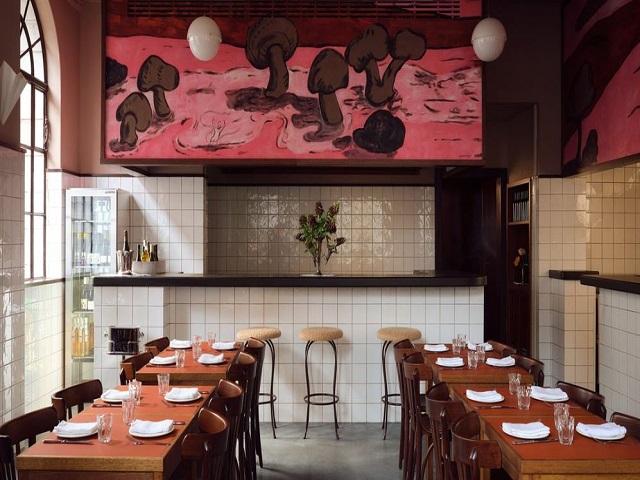
The ground floor dining room is anchored by three original arched windows that flood the space with natural light, highlighting gleaming white tiled walls and durable linoleum flooring. Rows of dark timber tables with burnt orange tops are paired with simple timber dining chairs, reinforcing the restrained material palette. At the bar, three bespoke fleecy stools with powder-coated steel legs introduce a tactile contrast.
Artwork plays a central role throughout the restaurant. Suspended above the bar is a hand-painted mural depicting an imagined blush pink landscape dotted with brown mushrooms, while a second mural above the open kitchen features two abstract, organic trees in Toogood’s recognisable illustrative style.
“I wanted the space, but especially this mural, to dig into our connection to the earth and the food we eat,” said Toogood. “It is a testament to soil, sustenance, decay and eternal regeneration.”
Extending from the main dining room is a light-filled orangery with a dedicated entrance into Spitalfields Market. The flexible space is enclosed by a sandy-toned hand-painted curtain that wraps around the room, while custom wall sconces crafted from repurposed bamboo baskets reinforce the project’s focus on handcrafted details and adaptive reuse.
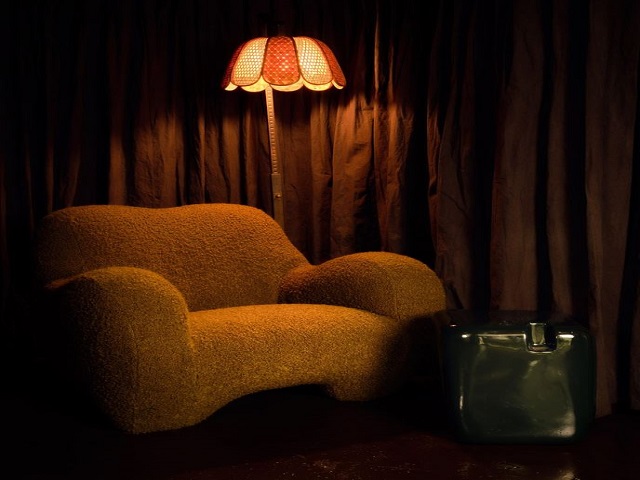
The immersive design continues downstairs, where the bathrooms are finished with glazed red and orange tiles under low lighting to create a cocoon-like atmosphere. An adjoining waiting area features some of Toogood’s best-known furniture pieces, including the sculptural Gummy armchair and ceramic Cobble side table, paired with a vintage 1960s petal floor lamp sourced from a specialist retailer.
The project demonstrates how materiality, craftsmanship and narrative can transform a hospitality venue into a space that reflects both its local context and contemporary design sensibilities.
Images by Ollie Tomlinson via Dezeen


Everyday errands and meals become opportunities to pause, gather and connect at the Luhu residential community, where XU ...
MA Financial has acquired a 50 per cent stake in The Glen shopping centre in Melbourne’s south-east from ...