Jun Matcha Club brings ritual and craft to café design
A former residential garage in has been transformed into a contemplative matcha café, with Jun Matcha Club offering a slower alternative to the fast-paced café culture emerging across the neighbourhood.
Located among a growing concentration of independent cafés and restaurants, the project responds to its local setting by making the ritual of matcha preparation the centre of the visitor experience.
GALLERY
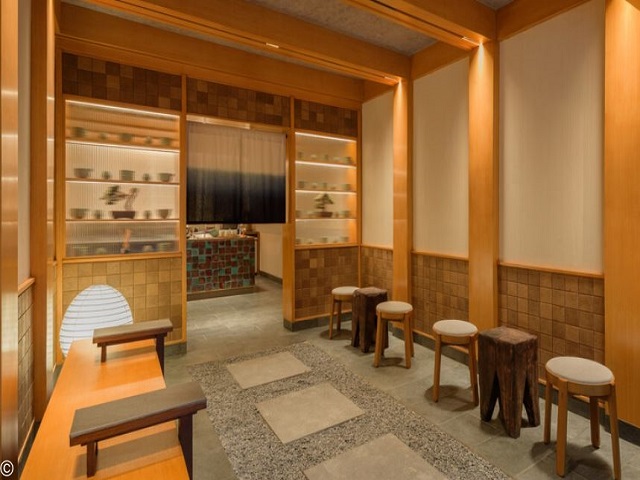
Rather than treating the venue as simply another place to eat and drink, its design uses sequence, materiality and Indonesian craftsmanship to encourage visitors to pause and engage with the process.
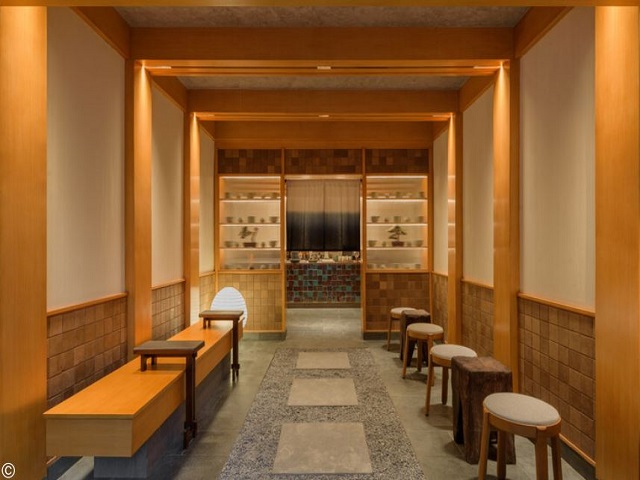
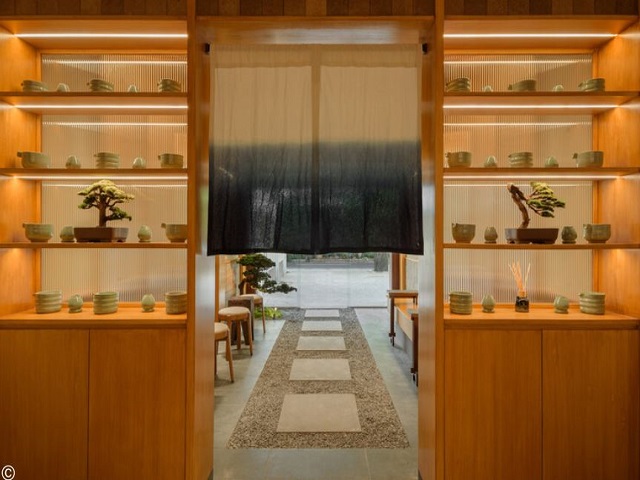
The spatial experience unfolds gradually, reflecting the deliberate pace and discipline associated with preparing matcha. Visitors first enter a semi-outdoor seating area that acts as a transition between the street and interior. From here, a threshold framed by naturally indigo-dyed fabric marks the move into the main room.
At the centre of the space is the matcha bar, positioned as the focal point of the interior and the place where preparation becomes part of the experience. Softly illuminated banana-fibre paper surrounds the bar, introducing warmth, texture and a subtle sense of depth while drawing attention towards the preparation ritual.
Material selection further connects the project to Indonesian making traditions. Lava stone tiles produced in Bali form the monolithic matcha bar, giving the central element a substantial, tactile quality. Elsewhere, wall panels incorporating recycled coffee grounds and handcrafted paper create subtle variations in texture and light.
The furniture continues this local material language through bamboo pieces and handcrafted teak stools, bringing the qualities of Indonesian craftsmanship into everyday moments of sitting, drinking and gathering.
Rather than relying on elaborate decoration, the interior allows these materials and their natural characteristics to establish the atmosphere. The result is a restrained palette where texture, craftsmanship and the movement between spaces do much of the visual work.
This approach reflects the values embedded in matcha practice itself: ritual, attentiveness and restraint. The architecture creates a measured rhythm between the neighbourhood outside and the quieter experience within, giving visitors an opportunity to slow down without disconnecting from the surrounding community.
For Panglima Polim, where independent hospitality venues are increasingly contributing to the character of the neighbourhood, Jun Matcha Club demonstrates how a small adaptive reuse project can create a distinctive local experience without relying on a large footprint.
By bringing together neighbourhood life, the ritual of preparing tea and Indonesian craftsmanship, Jun Matcha Club turns a former garage into a place shaped as much by the act of making as by the finished cup.
Images by Kafin Noe’man Studio via ArchDaily


Wall Rapture joins the Austaron Surfaces collection, bringing authentic mineral character, craftsmanship and design flexibility to contemporary interiors. Known ...
Building in the Galápagos Islands means working within one of the world’s most environmentally sensitive landscapes. For architect ...

A new town centre and a land-lease village of up to 364 homes are proposed for Yalyalup, as ...