SEVAS Water Catcher Rethinks Water Conservation in the Bathroom
As water efficiency becomes an increasingly important consideration in residential design, small interventions are offering new ways to reduce waste without requiring changes to a home’s plumbing.
GALLERY
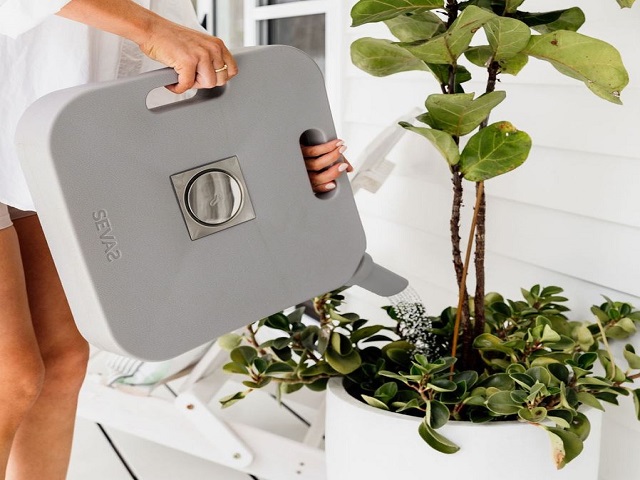
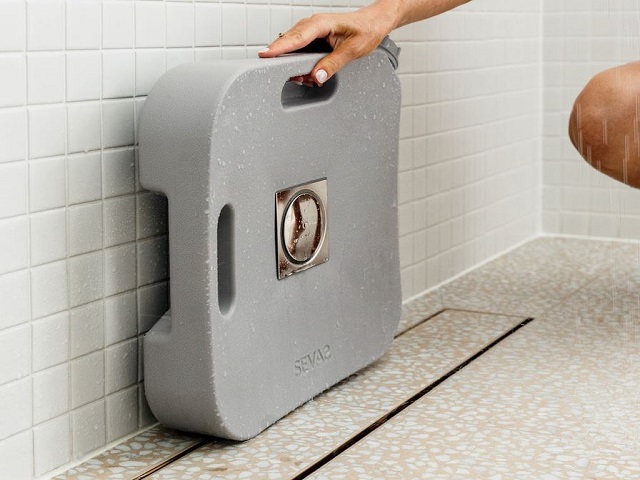
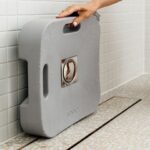
Australian-designed SEVAS Water Catcher approaches the issue through a familiar daily ritual, collecting clean water while the shower warms up and making it available for reuse around the home.
Designed by Eleanor and Peter Turner, SEVAS provides an alternative to the traditional bucket, which can be cumbersome to lift, difficult to position and visually intrusive in a carefully designed bathroom. Its low-profile form sits over the shower drain, capturing water before the shower reaches the desired temperature. Once filled, the container can be sealed and moved aside, with an included watering-can attachment allowing the collected water to be used on indoor plants or in the garden.
The unit holds up to five litres and requires no installation or plumbing modifications. Its compact, square profile measures approximately 40 centimetres across, with a shallow form intended to make storage easier between uses. The design responds to a practical challenge: making water reuse simple enough to become part of an everyday routine.
Material choice also contributes to the product’s functionality. The container is manufactured from recyclable high-density polyethylene, while a stainless-steel plug helps control the flow of water into and out of the unit. Its form is designed to make carrying and pouring more manageable than using a conventional bucket.
The potential savings depend on individual shower conditions and how much water is collected each time. SEVAS estimates that daily use can save up to 1,800 litres annually per household, although actual results will vary according to water pressure, shower fittings and the distance between the shower and hot-water system.
For bathroom designers, the product offers a reminder that water-conscious design does not always require a major renovation or complex technology. Everyday accessories can also influence how occupants interact with resources, particularly when sustainability is incorporated into an intuitive, practical object.
By rethinking a simple household habit, SEVAS demonstrates how product design can support more resource-conscious living while remaining compatible with existing bathrooms. Its focus is not on changing the appearance of the bathroom itself, but on making water reuse a more considered part of the space’s daily operation.
Images via Good Design


Today’s environmentally conscious homeowners and consumers demand practitioners be mindful of the carbon impact of their kitchen designs. ...

Renovating a kitchen within an older apartment often requires more than replacing cabinetry and appliances. In Sydney's Elizabeth Bay, ...
Kitchen design is often judged by what can be seen: the cabinetry, benchtops, appliances and carefully selected finishes. Yet ...
As water efficiency becomes an increasingly important consideration in residential design, small interventions are offering new ways to ...