Why Stopping Heat Before It Enters Matters in Commercial Buildings
When it comes to creating comfortable, energy-efficient commercial spaces, many building owners focus on improving air-conditioning systems or upgrading glazing. While these solutions certainly have their place, there’s one critical factor that’s often overlooked: preventing heat from entering the building in the first place.
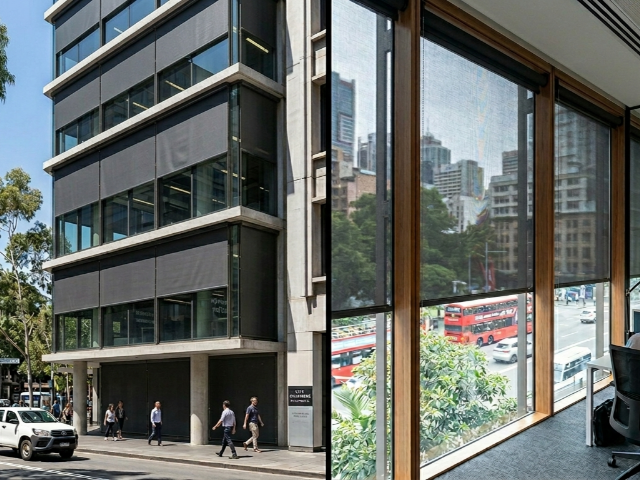
GALLERY
The reality is that once solar heat has penetrated the glass, it’s already too late.
Understanding Where the Heat Comes From
Sunlight isn’t made up of just the visible light we see. It also contains ultraviolet (UV) and infrared (IR) radiation. While UV rays are responsible for fading furnishings and finishes, it’s infrared radiation that carries most of the sun’s heat energy.
Although invisible to the human eye, infrared heat is what makes a sunny office, café, showroom or commercial workspace feel uncomfortably warm.
When this heat passes through glazing, it’s absorbed by floors, furniture, walls and other internal surfaces. These surfaces then radiate the heat back into the space, creating the familiar greenhouse effect that causes indoor temperatures to rise throughout the day.
The result?
- Higher cooling costs
- Increased reliance on air-conditioning
- Reduced occupant comfort
- Greater energy consumption
- Increased strain on HVAC systems
For commercial buildings with large areas of glazing, the impact can be substantial.
The Smarter Approach: Stop Solar Heat Before It Reaches the Glass
Rather than trying to remove heat after it has entered the building, building designers are increasingly adopting a passive cooling strategy—blocking solar heat externally.
External shading intercepts infrared radiation before it reaches the window, preventing much of the heat from entering the building envelope at all.
It’s a simple concept backed by building science: stopping heat outside is significantly more effective than trying to cool it once it’s indoors.
This is why external shading systems have become an important component of modern sustainable building design.
Commercial Outdoor Blinds That Work Harder
High-performance commercial outdoor blinds do far more than provide shade.
When paired with advanced technical fabrics such as Serge Ferrari Soltis 92, they become an effective energy management solution that can help improve building performance while enhancing occupant comfort.
Specifically engineered for exterior applications, Soltis 92 is designed to block a significant proportion of solar heat before it reaches the glazing, helping to reduce internal temperatures and lower cooling loads.
For building owners and facility managers, this can translate into:
- Lower energy consumption
- Reduced air-conditioning demand
- Improved thermal comfort
- Greater operational efficiency
- Support for sustainability and ESG objectives
Comfort Without Closing Off the View
One of the challenges with many traditional shading products is that they reduce natural light or completely obstruct the outlook.
Soltis 92 offers a different approach.
Its patented micro-ventilated fabric allows daylight to filter through while maintaining clear outward visibility, helping occupants remain visually connected to the surrounding environment.
This balance between solar protection and visual comfort makes it an ideal solution for:
- Office buildings
- Hospitality venues
- Restaurants and cafés
- Schools and universities
- Healthcare facilities
- Retail centres
- Public buildings
Occupants enjoy reduced glare and improved thermal comfort without sacrificing the benefits of natural light.
Engineered for Long-Term Performance
Commercial shading systems are expected to perform year after year in challenging Australian conditions.
That’s why the fabric itself is just as important as the blind system.
Soltis 92 is manufactured using Serge Ferrari’s exclusive Précontraint® technology, a process that maintains the fabric under constant tension during production. This creates exceptional dimensional stability, helping the material retain its shape and performance over time with minimal deformation or sagging.
Combined with a 10-year warranty, it provides confidence that the investment will continue delivering reliable performance long into the future.
A Practical Investment in Building Efficiency
As commercial buildings face increasing pressure to reduce energy use and improve sustainability, passive solutions are becoming an essential part of building design.
External commercial outdoor blinds fitted with high-performance fabrics like Serge Ferrari Soltis 92 offer an effective way to improve thermal performance without compromising aesthetics, natural light or occupant experience.
By preventing infrared heat from entering the building before it reaches the glass, businesses can create cooler, more comfortable spaces while reducing reliance on mechanical cooling and supporting long-term energy efficiency.
In today’s commercial environment, smarter shading isn’t simply about keeping the sun out—it’s about improving building performance from the outside in.
For more information on Soltis 92 visit https://rainbowshade.com.au/



British studio Richard Parr Associates has restored a trio of 19th-century buildings at The Newt in Somerset, creating ...
V-Leader is seeking to further revitalise Melbourne’s Lonsdale Street, lodging plans for a 32-level purpose-built student accommodation (PBSA) ...
Victoria Cross Tower in North Sydney demonstrates how the performance ambitions of a high-rise commercial building extend beyond ...

More than 2000 new homes could be delivered across Victoria under a streamlined planning pathway designed to unlock ...

Once considered a purely functional service area, the kitchen is increasingly being integrated with the living room to ...