Finch Bay Hotel Expands with Prefabricated Timber
Building in the Galápagos Islands means working within one of the world’s most environmentally sensitive landscapes. For architect Alfredo Ribadeneira, the expansion of Finch Bay Hotel on Santa Cruz Island has put that challenge at the centre of the design, with prefabricated construction and low-rise buildings intended to minimise disruption to the surrounding environment.
GALLERY
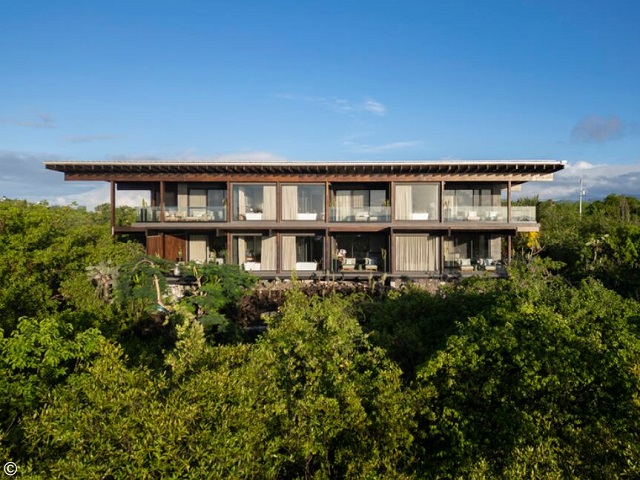
Designed by Alfredo Ribadeneira Arquitectos, the project adds guest accommodation to the hotel near Puerto Ayora, continuing an architectural approach that allows the landscape to take precedence over the buildings.
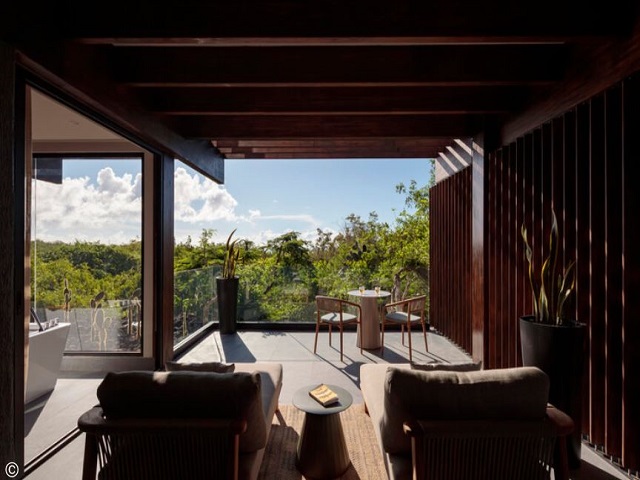
Rather than forming a single large structure, the hotel is arranged as a series of low-scale volumes around a landscaped communal core. The layout responds to the surrounding vegetation, coastal terrain and volcanic landscape, keeping the built form visually restrained while maintaining connections between guest spaces and the outdoors.
The island setting also shaped how the expansion was built. Strict environmental regulations, complex transport logistics and limited material availability made conventional construction methods less practical. Instead, components were designed and fabricated in Quito before being transported to the islands for assembly.
The prefabricated system reduced construction time and the volume of materials needing to be handled on site, helping limit waste and disturbance within the sensitive ecosystem. It also allowed the team to improve quality control and coordinate the building components before they reached the island.
Timber is central to the structural approach. Laminated teak sourced from cultivated forests forms the primary structure, offering a renewable alternative to more conventional building systems. Prefabricated cement floor panels with polyurethane insulation and lightweight internal partitions complete the assembly.
Material selection also responds to the demands of a coastal environment. Timber, volcanic stone, concrete and neutral finishes create a restrained palette intended to withstand exposure, require limited maintenance and age naturally over time.
The project’s environmental measures extend beyond its construction. Rainwater collection, wastewater treatment, recycling, energy-efficiency measures and photovoltaic panels form part of the hotel’s wider sustainability strategy.
The expansion builds on Finch Bay’s existing identity while demonstrating how design decisions can respond to the constraints of a particular place. In the Galápagos, where the natural environment is a defining part of the visitor experience, the approach is less about making an architectural statement than determining how a building can occupy the landscape with minimal disruption.
For Ribadeneira and his team, the project highlights the role of construction planning, material sourcing and prefabrication in shaping more considered hospitality developments, particularly in locations where the environmental cost of building requires close attention.
Images by Sebastian Crespo via ArchDaily


Building in the Galápagos Islands means working within one of the world’s most environmentally sensitive landscapes. For architect ...
A new town centre and a land-lease village of up to 364 homes are proposed for Yalyalup, as ...