Shade Sails with Long-Term Performance
Why the fabric you specify matters long after installation? Shade sails are an increasingly important architectural element across schools, playgrounds, aquatic centres, parks, car parks and public spaces.
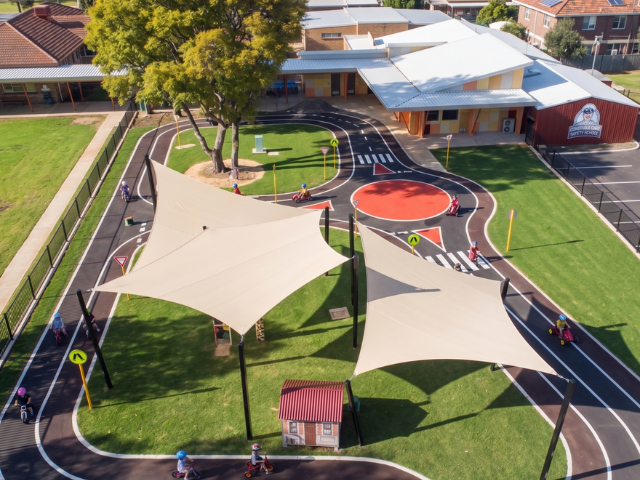
GALLERY
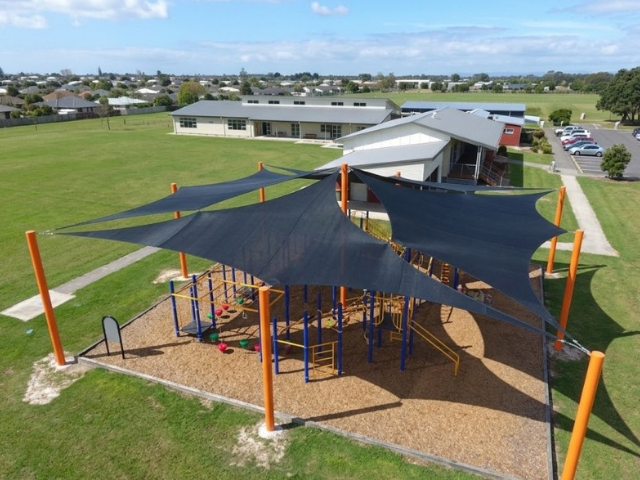
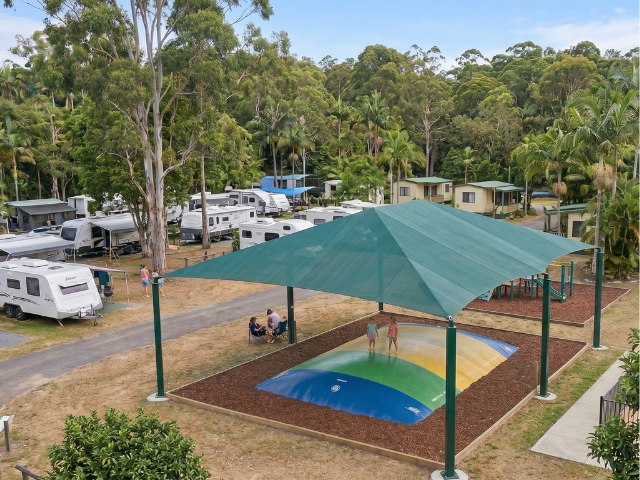
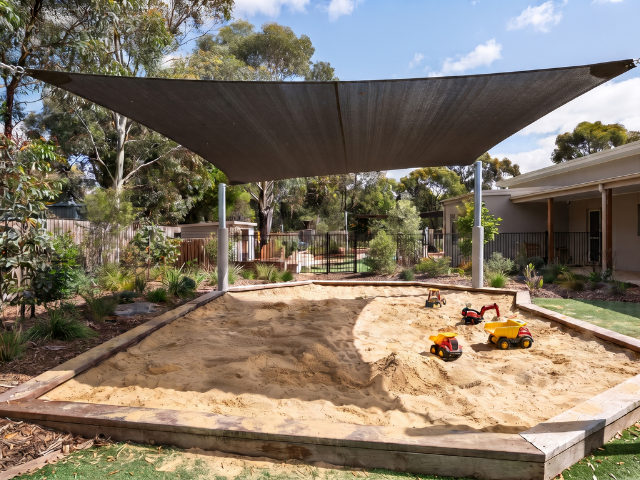
They can provide large areas of solar protection with relatively minimal structure while introducing colour, form and visual interest into a landscape. But when specifying a shade sail, there is an important consideration beyond its initial appearance:
A shade sail is designed for years of exposure — not just day one.
For architects and landscape architects, long-term performance should therefore be an important part of material selection.
What happens to shade fabric as it ages?
Most textile technical data is generated from new material. Breaking strength, tear resistance, UV protection and shade factor are all important specification criteria. But a shade sail will spend its life permanently tensioned and exposed to UV radiation, heat, wind, rain and changing weather conditions.
A useful additional question is: How much of that performance will remain after 10, 15 or 20 years?
Long-term performance begins with the textile itself. The quality of the HDPE polymer, UV stabilisers, pigments, masterbatch, yarn construction and manufacturing all influence how well an architectural shade fabric performs over time. The objective should not simply be for the shade sail to remain intact.
It should continue providing the strength and UV protection it was originally specified to deliver.
Putting Z16 to the test
Z16 architectural shade fabric provides an opportunity to look beyond day-one specifications, with aged fabric samples recovered and tested after extended periods of real-world outdoor exposure. A Rainforest Green Z16 sample tested after approximately 10 years retained 94% UV-R protection and 79% breaking force.
A separate weather-endurance assessment after approximately 15 years recorded 95.1% UVR block and slightly less than 80% of the fabric’s original warp strength. Perhaps most significantly, a Desert Sand Z16 shade sail was tested after approximately 20 years outdoors.
During its service life, the sail had experienced demanding conditions including multiple cyclones, extreme heat and severe hailstorms. After two decades, testing found that the fabric was still providing 95% UV-R block while retaining almost 60% of its original warp strength. The significance isn’t simply that the fabric survived for 20 years.
It was still performing its primary function — providing a high level of UV protection.
Designing the complete shade structure for longevity. Fabric is only one component of a long-life shade structure.
Appropriate three-dimensional geometry and catenary design help establish a stable tensioned membrane. Reinforced corners distribute concentrated loads into the fabric, while quality fabrication, durable sewing thread, corrosion-resistant hardware and appropriately engineered posts and footings all contribute to the longevity of the finished structure. Maintaining correct tension is also important. Rainbow Shade’s maintenance guidance notes that loose shade sails are more prone to damage and can result in damage to both the fabric and supporting structure.
Specifying a fabric for long-term performance
Z16 is a 200 GSM knitted HDPE architectural shade fabric manufactured using monofilament and tape construction. Depending on colour, it provides up to 99% UVR block, with a range of colours allowing architects to balance aesthetics, shade and UV protection. When evaluating architectural shade fabric, don’t only ask: How does it perform when it’s new?
What evidence is there of how it performs after years of real-world exposure?
For shade structures intended to remain part of the built environment for many years, documented long-term performance matters. Design for long-term shade performance. Specify Z16.
To learn more, visit Rainbow Shade.


Everyday errands and meals become opportunities to pause, gather and connect at the Luhu residential community, where XU ...

In Wilcannia, a new cultural centre is doing more than providing space for art, language and community gatherings. ...
Why the fabric you specify matters long after installation? Shade sails are an increasingly important architectural element across ...

When FJCStudio set out to transform the Cutaway beneath Barangaroo Reserve into a new cultural venue, the design ...
The right pool fittings can elevate your pool’s performance and visual appeal When designing a swimming pool, it’s often ...